
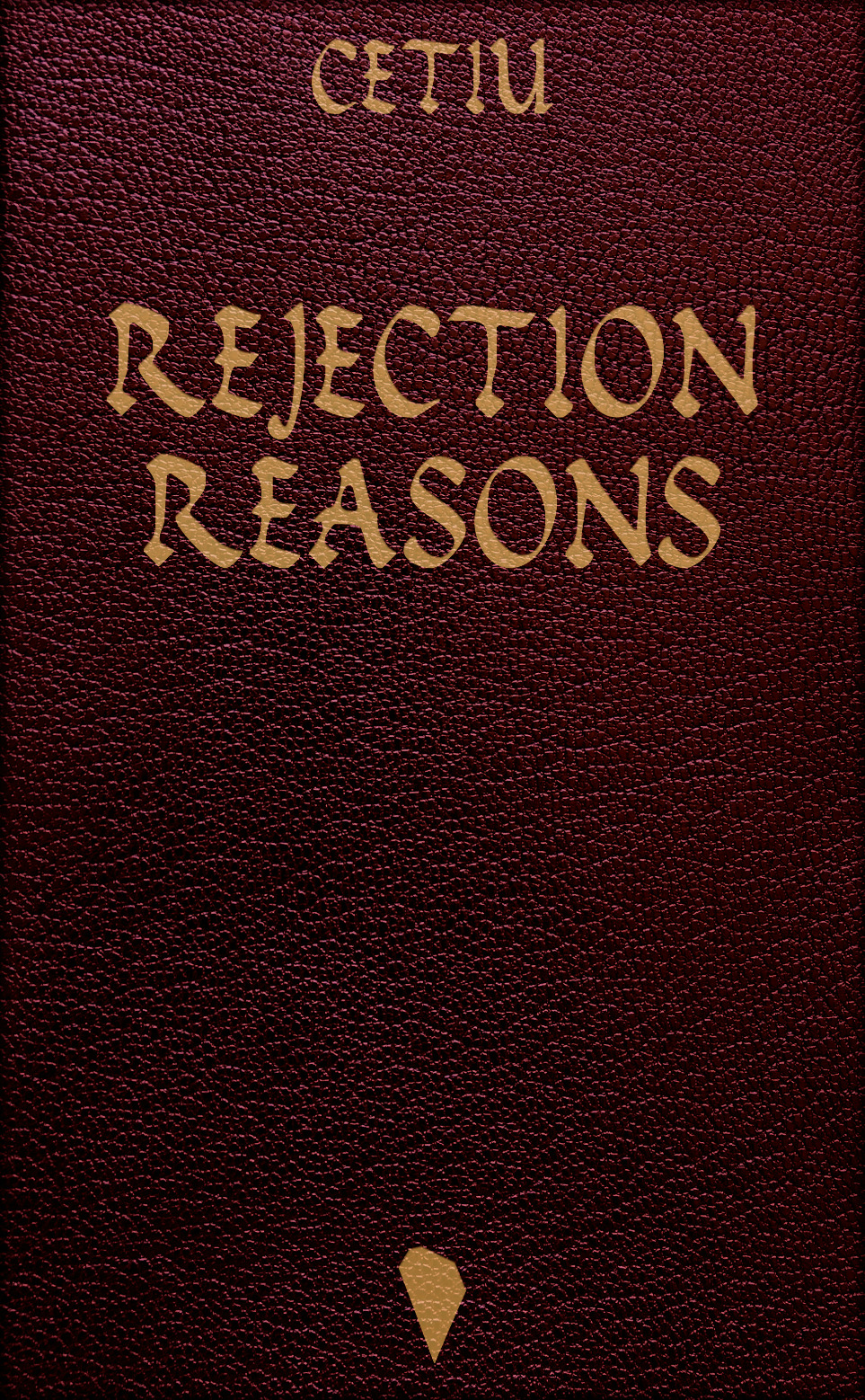
Newlyweds move into an abandoned apartment on the edge of the city and a dense forest. And the very beginning of their new life reminds the guy of his contract with a tricky organization. Everything happens quickly, eerily, and incomprehensibly. It turns out that the girl is mentioned in that very contract. A man appears who is supposed to fulfill all the terms of the contract. But these are not the only difficulties of the situation.
“Why don’t you want to sell this apartment?” a female real estate agent asks, surprised.
“And why should I?” the elderly owner of the flat counters with a smirk.
“They’re offering you an enormous amount of money for it. About three times the market value. Forgive my bluntness, but it’s time for you to think about enjoying the rest of your life.”
“No one knows how much longer I have to live. You certainly don’t,” the old woman cuts her off confidently, without a trace of irritation, though the conversation has been unpleasant from the first word.
“At least consider the offers,” the agent suggests, more calmly.
“These people?” she looks skeptically at the young couple near the front door.
“This couple offered the smallest huge sum of all the announced ones. The unvoiced amounts are even higher. And not just three times the value,” she hints with a sly look at the astronomical offers and the old woman’s refusal to the young couple.
“Why does everyone want this apartment?” the old woman looks out the window indifferently.
“It contains something for which many are willing to pay a fortune.”
“It also contains something that is more precious to me than what everyone wants.”
“Are we talking about different things?” the agent clarifies the direction of the old woman’s thoughts and values.
“Everyone wants this,” the grey-haired woman points to an unusual, wall-sized painting.
“The last work of a very famous artist from the last century. Some believe it was created after his death. They say the mystical painting absorbed his soul.”
“Is that a value?” the old woman looks calmly at the picture. “I don’t believe in fairy tales about magical paintings. Or in the stupid notion that the soul exists. How many soulful people have you seen?”
“Fine,” the young agent suppresses her anger at the owner’s flagrant ignorance. “Tell me, what is so special about this apartment for you?”
“Special,” she smiles, shifting her gaze to the floor, the interior doors, to the agent, and out the window. “My entire life was spent here with a man who is more important to me than all the most outstanding artists in the world and all the money they’re offering me. If someone’s, as you say, soul remained here, it’s his. Other men have never interested me like that. And they won’t. Sit down and make yourself comfortable, I’ll tell you how it all happened,” she pours tea.
“I absolutely don’t have time for this,” the agent protests, pushing the cup away.
“Don’t you want this apartment?” the elderly owner hints persistently.
“I do,” she softens and lowers her tone, returning to the tea.
“In that case, drink your tea,” she slides the cup closer to the young woman.
“I’ll be just a second,” she walks over to the young couple waiting for a decision.
“Did it work?” the young man from the couple who offered the minimum-maximum price asks.
“Not yet,” the agent reports optimistically.
“How much longer do we have to wait?” the young woman asks, afraid of missing out on the precious opportunity, which could later fetch a fabulous sum.
“Don’t wait. I’ll contact you when everything is settled. Go home and wait for my call.”
“All right,” the young people reluctantly agree. They’re ready to sleep on the doorstep just to get their hands on the treasure with windows and doors. “Be sure to call us when everything is figured out!”
“Goodbye,” she sees the young couple out of the apartment with a dry phrase.
“Is everything all right?” the sweet old woman asks with a smile, sitting on a little sofa upholstered in burgundy velvet with a cup of tea, looking at the real estate agent’s nervous expression.
“They’re all settled,” she smiles, suppressing her true emotions. “Tell me your story!”
“You’re in luck. I remember everything just as vividly as I see you. Although, my memories are more real to me than your presence. Listen carefully. Then you decide whether or not to sell this apartment.”
“Well, darling, shall we start?” my husband Luther asks me.
“Start what?” I ask back, utterly unable to recall what I’m supposed to remember.
“Did you really forget what we agreed on a week ago?” he drops his hands, which hold a brush and a can of white paint, in disappointment.
“I’m sorry, sweetheart,” I remember the agreement, turning to my husband. “My memory is completely muddled by a mess of thoughts about everything at once.” Moving into this apartment threw me off.
“It’s fine,” Luther tries not to show how upset he is.
“Okay! I don’t understand, where’s my brush?” I ask in a serious tone, looking for any paintbrush. I’m ready to paint with my bare hands just to avoid upsetting my husband.
“Take mine!” Luther brightens up at my enthusiasm.
“And what about you? Which one will you use?” I can’t deprive the person who started all this of his main joy.
“I have another one. It’s just as good,” he pulls a second brush from a cardboard box filled with metal cans. Paint streaks on each can indicate the color inside.
“That’s wonderful!” I’m happy that my love’s mood is lifting. “Did you finally settle on white paint?”
“We’ll start with white, and then we’ll add colors based on our mood and impressions.”
“Great idea!” I kiss his still-clean cheek and take the can of paint from his hands. “Did you get the solvent and rags?” the question sounds more like a checklist.
“I did,” he shows me the bottle of solvent and pulls an old pillowcase from the box—it’s stained with every possible color, even ones that aren’t here.
“What should we paint?” I stand ready, brush in hand, looking for a target.
“Let’s start with the doors, and we’ll see from there.”
“All right, let’s begin,” I reply, drawing the brush across the slightly wavy surface of the bare wood.
“What is this?” Luther is surprised and scared at the same time.
“I wish I knew,” I drop the brush onto the floor and step back. The single stroke of white paint transforms into a red stripe under the pressure of the brush.
“Maybe they used this brush for red paint before?” my husband suggests, picking up the brush.
“There wasn’t a single drop of red on the bristles,” I'm sure of every word. “Look closely.”
“No, not a single red drop,” Luther examines the white paint on the brush, comparing it to the red stripe on the door panel, which fades out toward the bottom. “It’s definitely white paint in the can.”
“Tell me what this means,” I plead, desperate for him to dispel the fear gradually rising in my chest.
“I don’t know,” he admits in a whisper. He approaches cautiously and sniffs the drying paint on the door. “Let’s postpone this until another day,” he puts the brushes and the can of white paint back into the box.
“I don’t think I’ll want to continue,” without looking at the door, I pull Luther toward the other room.
“Go on, I’ll be with you soon,” he says calmly, kissing my hand.
“What about you?” I don’t know what I'm more afraid of: staying alone or leaving Luther by himself with the inexplicable thing.
“Go,” he gently insists on his decision.
“Fine,” I walk into the next room, leaving the clean wooden door ajar. I stand a few steps from the doorway. I listen carefully.
“Why here?” Luther whispers, indignant. “Why ruin our lives?” he questions the emptiness, taking the heavy door off its hinges. The wooden corner thuds against the floor. “I won’t let you ruin our lives. Enough of all this! I won’t allow it!” the anger, compressed into a whisper, sounds no louder than the church bells on the edge of the city. “Get out of our house!” the silence sharply cracks with the sound of the door panels shattering beneath the window. Thankfully, we are the only ones living in the whole house. All the neighbors moved out long before we relocated. No one complains.
“Luther,” I call in a low voice. “Come here, I’m scared.”
“I’m coming, darling,” he opens the unpainted door and looks at me. It’s a good thing; he didn’t notice. A red stripe of the same shape and in the same spot has also appeared on this door.
“Sit down,” I run my palm across the velvet next to me. He needs to calm down a bit now. “Did you knock anyone over with the door?” I try to lighten the tension with a joke.
“Possibly,” he looks seriously through the closed door and into this room.
“Who?” I ask a little more seriously, expecting the worst.
“A fly was passing by at the wrong moment. It caught the brunt of it,” the nervous tension gives way to laughter and a relaxed embrace.
“Let’s not leave the room today,” I suggest, looking out the window, which is now devoid of daylight.
“The day passed so quickly,” Luther says in surprise, peering closer. “It took us a whole day just to make one stripe with a brush. And to throw out that wretched door.”
“I thought it hadn’t been more than half an hour,” I look at the window and at Luther, puzzled.
“That’s right. It couldn’t have been more than that.” “I think it’s brightening up,” sunlight flows across the glass, flooding the room. “Come on, let’s go look,” he pulls me after him.
“A solar eclipse!” I exclaim with relief. The stress didn’t allow us to enjoy the rare phenomenon. We didn’t even notice the darkness swallowing the sun. “Everyday life is already managing to deprive us of something wonderful,” I say my thoughts aloud, almost joking.
“Are you suggesting we just leave everything as it is?” he looks into my eyes, accepting defeat from the apartment after the first attempt to transform it.
“Yes. It’s not bad as is,” Luther looks at the walls differently.
“All right, I'm perfectly happy with everything. What’s that?” he draws attention to the door, which has opened slightly while we were looking out the window.
“What are you talking about?” I want to shield the red stripe that appeared without a brush.
“Tell me you see it too, or I’ll think I’ve finally lost it.”
“Yes, darling, I see it,” I don’t want Luther to go crazy from the truth. “I thought you knew where they came from.”
“I’m not sure,” he walks decisively toward the door. “Nothing should destroy our happiness and peace!” he takes the second door off its hinges. He carries it to the balcony and throws it onto the previous one. The cracking of wood is complemented by the sound of boards and splinters flying apart.
“Maybe you should tell me about it?” I cautiously peek into his eyes, which are full of worry and helpless anger.
“I hope I won’t have to tell you anything,” he removes the remaining doors and sends them down to join the first two. Identical red stripes appear on the unpainted boards as they fall.
“What did the paint smell like when you sniffed it?” I don’t want to bother my husband any more than necessary, but I’ll feel calmer knowing what’s going on with us.
“Not like paint,” he answers in a whisper, his intonation marking a period. “Let’s take a little walk and see how the eclipse scared people,” he puts on a light jacket right over his worn work clothes. He hands me my jacket.
“Are you going out dressed like that?” my clothes are even worse. The fabric is so old that holes appear on it by themselves.
“Not ‘am I going’, but ‘are we going’,” he corrects my surprised question. “And not ‘are we going’, but ‘we are going’,” he helps me put on the jacket, pulls a hat over my head, and pushes me out of the apartment.
“But I’m dressed like this,” I protest weakly, adjusting the hat.
“No one will see,” he locks the door and rushes down the stairs.
“But you just said we’re going to look at people’s reaction to the solar eclipse,” I remind him of the words he spoke a minute ago.
“What people?” he asks in surprise. “Did you forget where we live?” he laughs as he descends. “It’s just us and a couple of raccoons in the vicinity. Who’s keeping who company as a neighbor is still up for debate. It’s nice outside,” he breathes in the fresh, warm autumn air. “We should go for walks more often; we’re always cooped up in the apartment.”
“We just moved in,” I remind him of the known fact. “And this weather won’t last forever.”
“That’s why we need to go for walks more often. We’ll try to catch as many fine days as possible. And what about the weather? Do you think I won’t drag you out for a walk in the rain and snow?” Luther smirks.
“That’s what I’m afraid of—that you will drag me out,” I won’t say I don’t like rain and snow, but it’s cozier inside the apartment in that kind of weather.
“You’ve summoned the rain!” he comes up from behind and sprinkles yellow and red leaves on me.
“That turned out to be a leafy rain,” I catch a red leaf. It reminds me of the paint on the door. I immediately toss it aside. I don’t do it too abruptly, so Luther doesn’t catch the association. I don’t want to remind him of what we left the apartment to get away from.
“The rain took a long time to gather,” he smiles happily, looking at the sky. “I hope a real one doesn’t start.”
“That could happen,” I look at the clouds creeping up to the sun. It’s still warm, but no longer hot. In the summer, the open sun would force us to seek shade—the darker, the better. “So, do you want to go to the city, to the people, or should we walk in the forest?”
“What people?” he’s surprised by the option. “Did we specially buy an apartment on the border of the forest just to go for walks in the city?” he leads the way through the trees on the green, leaf-strewn grass. He smiles, then becomes serious for a moment, and his mood improves again. Red leaves aren’t the only hindrance to me on this walk. If only I knew what this nonsense with the paint was about. And I don’t want to pry. If he’s not telling me, there’s a good reason for it. Maybe more than one.
“Are we going to look for raccoons?” I joke, catching up to my husband.
“Excellent idea!” Luther picks up on it. “We’ll find them and invite them over.”
“What will we feed them?” I ask seriously, since we don’t even have food for ourselves.
“We’ll look in the trash can,” Luther jokes back.
“We don’t even have a trash can. I don’t think forest raccoons will eat garbage like the city ones. We should learn a thing or two about being prepared from them.”
“Are you suggesting we look for food here?” he peers between the leaves, looking for mushrooms.
“I suggest we resolve this issue before sunset so we don’t have to walk to the city for groceries in the dark,” I don’t want to spoil our nature walk with mundane questions, but we need to eat something.
“We aren’t going to the city. There’s a small village beyond the forest. We’ll buy groceries there. We just need to go a bit to the left,” he changes course.
“Through the whole forest?” I can’t hide my displeasure at the upcoming walk, which will leave my legs aching.
“It’s the edge; it’s not far,” Luther leads on without stopping.
“Do you think they give away food for free in the village?” I hint that I didn’t bring any money with me.
“I'm sure our money is no worse than city money,” he shows a few banknotes from his pocket.
“I didn’t notice when you took them. Do you always carry money in your work clothes?” I try to recall the moment the money ended up in Luther’s pocket.
“These pockets attract money,” he jokes, patting his pockets. “See how much gold is scattered around,” he points to the golden leaves all around.
“I see it, but no one will give us food for these treasures, though they might share for paper with drawings on it. So, I choose real money,” I take the money from Luther.
“Why so realistic in a fairy tale?” he looks at me with reproach. “We should’ve not taken your real money and come to the village with yellow leaves. I’d bet someone would’ve shared food even for that kind of payment.”
“Then let’s bet,” I choose a few beautiful golden leaves and hand them to Luther. “Buy us dinner with these, and for breakfast, fine, I’ll buy something with this ugly money that has no place in a fairy tale.”
“Fine, I’ll buy it,” my husband agrees eagerly. “What are we betting on that I’ll succeed?”
“If you buy food, you eat. If you don’t buy food, you don’t eat,” the terms are joking, but I’m curious how this will end.
“It’s a deal!” a firm handshake seals the agreement more tightly than a signature in blood. “Let’s pick up the pace, it’s not far now,” a few first houses with smoking chimneys are visible through the trees.
“Will they mistake us for beggars?” I feel a little uncomfortable about our appearance.
“We’ll have a better chance of buying things with golden banknotes that way,” he caresses the leaves like gold ingots.
“Then let’s go. You’ll do the talking. You can tell everyone I’m mute. I don’t want them to start asking me why we look like paupers and pitying me,” I grumble, walking behind Luther.
“No one will say anything, you’ll see,” my husband assures me, having absolute faith in the remaining humanity of the villagers.
“We’ll see,” I utter my last word before going mute.
“Landowners!” Luther calls out good-naturedly over the fence made of large stones. A wall like this won’t stop thieves, but it looks like a fortress—majestic. The family crest is painted on the metal gate. It’s unknown how authentic it is, but it looks decent and respectable. On the shield, the snake coils around the lion’s mane, holding her head near the ear of the king of beasts. The lion stares intently and aggressively at everyone who looks his way. The thought that the snake might whisper that we are enemies makes my skin crawl; if that happens, we’ll have to run back through the forest. And even that won’t save us. The lion’s muscles are like an athlete’s.
“We don’t need mushrooms!” the homeowner replies from behind a slightly ajar door. “We gathered plenty ourselves this morning.”
“We didn’t bring mushrooms,” Luther catches onto the thin thread of connection.
“Not mushrooms?” the man peers out the door with interest. “Then what valuable thing did you find that’s worth distracting me at this hour? I was having such a dream,” he recalls the pleasant memory wistfully.
“Gold!” my husband declares proudly and seriously.
“Gold?” the owner asks again, his voice greedy.
“Three ingots!” Luther proudly lifts the yellow leaves above his head so the man can see them.
“Gold,” the man whispers in a captivated voice. “Will you share?” his hands reach toward the leaves like the snake on the crest.
“We’ll trade!” Luther replies excitedly, tucking the leaves into his pocket.
“Trade?” the fortress owner repeats thoughtfully. “What will we be trading for?” his eyes gleam with golden avarice.
“We need food. Share what you have with us, and we’ll share what we have with you,” my husband states the terms.
“Come inside,” he hurriedly invites us to enter before anyone sees us. “And don’t wave gold around so carelessly. People here are so greedy they could tear off your arm along with the gold. Come in quickly,” he lets us into the house and closes the door. “I don’t have much food to offer,” he places a stick of sausage and a pyramid of cheese on the table next to the bread, pulls a box of tomatoes from under the bed, gives us a few, and four apples roll nearby. “This is from me personally,” he puts a bottle of wine on the table. “Now, the payment,” he extends his hand toward Luther.
“As we agreed,” my husband places one gold leaf in the homeowner’s wrinkled palm.
“And that’s all?” the wrinkled man looks at the payment as if it were pitiful pennies.
“All right, then! It’s a good trade! A worthy one!” Luther hands over the remaining two leaves.
“It’s a pleasure doing business with you,” the man hides the leaves under a pillow. “Gold is worth a lot these days. When you get hungry, feel free to drop by again for another trade. Just don’t say a word to anyone!” he warns seriously. “Or they’ll set up a marketplace here.”
“As you say,” Luther smiles. “It’s time for us to go,” he leads me out of the house.
“Of course! Come by often,” he smiles as he sees us through the gate with the crest. He closes the gate and hurries back into the house, locking the door behind him.
“Don’t you think the lion looked angrier at us after our visit?” the lion’s gaze on the crest definitely changed.
“You imagined it,” Luther replies contentedly.
“I couldn’t have imagined something like that. Before, he was looking at us calmly, with interest, but now he’s glaring as if we’re enemies. And the snake used to just whisper in his ear, but now she’s looking at us too,” I peer closer, starting to doubt that I saw the crest correctly the first time.
“A sure sign that it’s time for us to head home,” Luther urges, leading me through the forest away from the village.
“Wait,” I stop the excited man. “How did you do that?”
“It’s all magic,” he answers with a mischievous smile.
“Or a trick?” I subtly suggest that I demand an explanation for his dishonest action.
“You saw everything yourself. We exchanged the three leaves you gave me for this,” he indicates the food the homeowner gathered.
“You’re telling me what happened. But you’re not telling me why that man sincerely believed he was being given gold,” I don’t want to hopelessly miss the moment when I can find out everything. If I close my eyes now, I’ll never know what really happened later. I don’t want to cause a scene. I decided not to press him about the paint, although I’m extremely curious about what it means. And now this trick with the gold leaves.
“Fine, I admit it,” Luther stops in the middle of the path, which is covered in “gold.” “That was dishonest of me. In my defense, I’ll say that initially, I wanted to buy everything honestly, but you took all my money away.”
“So, I’m to blame for everything and forced you to pull a dishonest trick? Is that what you’re saying?” my husband’s certainty of his own righteousness starts to infuriate me.
“Note that I had money, and now you have it,” he insists that I am at fault.
“You could have taken my real money to pay!” I hand back what I took from him on the way to the village.
“But we made a bet,” he reminds eagerly. “And I won!” he announces his victory contentedly to the entire forest.
“At what cost? By deceiving an old man?” I don’t so much want to awaken his conscience as I want to at least extract a promise from him not to do it again.
“I wanted to win, and I won. That’s all I can tell you,” the smile vanishes from his face.
“I’m sorry. I’m the one to blame for everything,” I catch up with my husband and take his unoccupied hand. “Understand, I need to know what that was.”
“Let’s talk at home,” he looks through the thinning tree crowns at the reddening gray sky.
“All right, I’ll wait,” I don’t want to spend the rest of our walk in a bad mood. “You did that cleverly, though,” I voice the long-awaited praise.
“Yeah, it was fun,” Luther’s contented smile returns.
“We got back faster than we walked to the village,” I notice how quickly time has passed. “It hasn’t even gotten dark yet.”
“After tricks like that, it’s better to hurry. So we did,” the trickster explains with a smile. “Careful,” he sidesteps the broken boards piled up after their flight from the balcony without looking.
“What is that?” I jump away from the pile of splinters.
“What’s there?” we both have to look at what we didn’t want to and weren’t planning to.
“They were moving,” I point a finger at the heap.
“Are you sure?” Luther peers at it. “I can’t see anything in the twilight,” he leads me into the house with a serious expression.
“Look! There!” the boards fall down from above.
“Well, look who’s here—our neighbors,” Luther says with a relieved smile. “They’re gathering boards for their new home.”
“Or they’ll settle here,” I say what I wish for. We need neighbors. And raccoons are much nicer than people.
“We should feed them so they visit more often,” Luther breaks off a piece of cheese and sausage and gives it to the wary animal. Small paws take the food. Then only the heels of the breadwinner running into the forest are visible. “See? Even something scary can turn into a pleasant encounter,” he tries to cheer me up after the scare.
“Or the opposite,” I whisper as I enter the house.
“Or the opposite,” Luther repeats even more quietly, following me inside.
“Why didn’t they leave the lights on here?” I ask, placing the food out between the three candles.
“For whom?” Luther asks with a smile. “Everyone’s long gone.”
“But we aren’t from here; we came here,” I say, not even sure why I’m arguing. “By the way, why did we come here?” I’m somehow certain this is the best moment I’ll get to ask.
“You know, housing in the city is expensive. We can’t even afford to rent a small room. And these apartments are free—they’re giving them away just so this edge of the city isn’t completely empty. And it’s nice for us here without people, isn’t it?” he knows the answer he wants to hear. I can’t let this subject drop.
“I think our new home, the red paint, and the trick in the village didn’t happen on the same day by accident,” I transition smoothly to uncovering all the secrets.
“So the showdown caught up with us,” Luther sighs heavily, setting down a piece of bread and sausage.
“These aren’t just questions. I need to know what’s going on so I don’t fear every little sound from not knowing what’s behind it,” I soften my tone. I don’t want a fireside chat by candlelight to turn into a domestic row.
“I can calm you a little. You personally have nothing to fear,” he takes my hand.
“I personally?” I repeat with slight bewilderment. “This hasn’t been about me personally for a long time. We’re together; we share everything equally. And I need to know everything we’re going to be sharing. I don’t want our new life in a new home to start like this. Those awful, bloody smears on the doors.”
“So you realized it’s blood,” Luther whispers.
“Even a child can tell the difference between paint and blood. And your expression is far more eloquent than any words you could’ve used to explain things to me right away,” I keep trying not to raise my voice so I don’t upset my husband even more. “Tell me honestly, what’s happening? I don’t want a fight, but I need to know the truth.”
“Did you see the crest on the gates in the village?” Luther begins, taking the long way around.
“It was hard to miss such a large crest, painted in fresh colors on faded gates.”
“It’s not there,” he says, pausing in thought. “We see it. But in reality, the crest isn’t there.”
“Why do we see it then?” I try not to jump to conclusions.
“I see it. You’ve become a part of my life. Now you see what I see. It’s the same situation with the paint on the doors. They appear everywhere I am. And now, everywhere you are, too.”
“Why are these paints pursuing us?” I want to get straight to the point without any beating around the bush.
“It’s my family’s crest. Ours now. Ever since we became husband and wife. I didn’t show it to you before because I didn’t want to scare you. It’s passed down from generation to generation. I’m the last of our line. We will keep seeing it until an heir appears.”
“Why does it appear to us? And it changes, too. The lion’s stare scared me a little. And does that mean I’m the snake?” that sounds like an insult.
“The snake part is kind of funny,” Luther unexpectedly smiles. “The crest hasn’t changed in hundreds of years. The image doesn’t relate to you personally, but now you are depicted on it. And it appears to warn us about something, to prompt us, or to keep us safe from something. Today, it was scolding us when we were leaving.”
“We’ve sorted that out a bit. And what about the red paint? We’ll just call it that. I don’t want to say blood out loud,” I say the word, and my face instinctively wrinkles in disgust.
“It’s a sign. I don’t know who it’s from or what it means. I’m seeing it for the first time,” Luther says, looking puzzled.
“Are you involved in something?” I ask cautiously, trying not to stir up anxiety in my husband. “Is it somehow connected to the trick in the village?”
“I hadn’t considered a link. I’ve done that trick countless times, and nothing like this has ever preceded it,” he stares intently into my eyes, hiding something. “Sometimes I create an illusion of gold objects to trade them for food, like now. That trick only works on greedy people.”
“Is the wedding ring the same kind of trick?” I test the gold with my teeth.
“What? No!” Luther protests with a smile. “How could I ever deceive my wife? How could you even think that?”
“Sorry,” I apologize quietly, gazing into the sincerity of his eyes, which sparkle in the candlelight on the table.
“The trick with you was different,” Luther laughs.
“So you did use a trick,” Now I absolutely need to know what the deal is.
“Could I have managed without one? How could a girl like you ever notice a simple guy wandering around the city?” Luther grows sadder, recalling the years before the newlyweds met. “There was no chance of further conversation at all. Remember when your bicycle tire burst?”
“So you punctured it?” I feel like I’ve caught a criminal.
“I couldn’t bring myself to do it,” Luther admits with a smile. “You went to the cobbler’s workshop because there was no one else who could help you then.”
“Are you acquainted with this cobbler?” I guess the obvious possibility.
“No, I’ve never spoken to him,” he smiles mysteriously, keeping the secret further from me. “He patched the inner tube, and you rode on.”
“Did you push that old woman into my path?” I remember, indignant.
“Oh, my conscience wouldn’t allow it,” Luther says seriously.
“Did you steal my wallet with all my money, and then put it back in the bag on my bike?”
“That was your inattentiveness; I had nothing to do with it.”
“Then what was your trick?” I can’t recall anything unusual.
“Do you think it was easy to run after you across the whole city?” Luther says with a smile. “Without magical powers, I wouldn’t have run even half the distance. It’s a good thing all sorts of things kept happening to you, and I had time to rest,” Luther laughs.
“So that’s your magic—special powers of endurance?”
“The magic is that I saw you and realized I was ready to run after you across the entire world.”
“Then why didn’t you catch up right away, and only spoke to me the next day?”
“I doubted myself. Don’t forget, I looked even worse back then than I do now,” he gestures to his torn work clothes, which smell of the forest’s autumn dampness.
“And the next day you looked well-dressed?” I laugh, recalling the threadbare vest over the unwashed white t-shirt. “Those pants,” I can’t stop laughing. “What color were they?”
“Purple. Velvet, by the way,” he reminds with a dignified look.
“Where did you even get them?” I can’t settle down.
“A friend was working at the theater then. Maybe he still is. I helped write plays, and he’d slip me some money and clothes for special occasions.”
“And did you have many special occasions?” a hint of jealousy flashes in my voice.
“You are my most special and only occasion,” he says with absolute seriousness, as if his life depends on those words.
“Is that why you couldn’t string two words together when we met?” I make my smile softer so as not to hurt my husband’s feelings.
“I don’t know what happened to me then,” Luther explains. “On the way, I prepared, rehearsed every word, as if I were reciting lines from a play, but when I got to your house, I forgot everything. I couldn’t even remember my own name to introduce myself.”
“Yes, the word you spoke then could hardly be called a name,” I still can’t suppress my laughter.
“But you spoke so confidently, it was hard to guess that our meeting was special for you,” Luther says sadly.
“I’d had to send so many guys away before you. Beneath the slight arrogance, I was hiding the joy that you had dared to come to me,” I admit that the meeting made me happy, so he doesn’t think the moment was only special for him.
“So you saw me earlier?” he’s genuinely surprised by the turn the truth has taken.
“Wouldn’t you notice a guy running after you, stopping to catch his breath?” I can’t help laughing again. “You should have seen yourself. All red-faced, your clothes flapping in tatters in the wind, your hair a mess.”
“How did you notice me looking like that, and remember me?” Luther is surprised, picturing himself from the outside.
“That kind of persistence brings more than just laughter. I admired you then. Not everyone would dare to run such a marathon just to look at a girl from a distance. And you weren’t completely dirty. Your face was clean, and your gaze was clear. Your eyes were a little cunning and mysterious. The fatigue changed them to pure kindness and the desire to meet. I was flattered to be your cherished goal. I haven’t told anyone this. I’m admitting it to myself for the first time, so don’t take advantage of my openness.”
“I should have told you all this sooner so I wouldn’t feel unworthy of you,” Luther laments, recalling the unpleasant feeling that has lasted until now and left a sense of unworthiness.
“Forgive me, darling,” I hug and kiss Luther.
“Careful!” he catches a flash of flame running quickly along a strand of my hair that fell into the candle.
“Promise me you’ll never hide anything from me again. If the crest appears to both of us, then we’ll face the signs together,” I seriously ask my husband.
“All right,” he agrees immediately after my sincere confession.
“And try to lay off the tricks, okay? You saw how the crest reacted,” I recall the lion’s displeased expression and the snake’s reproach.
“The crest knows and understands everything better than we do,” Luther concedes.
“Are there really no more secrets?” I want to know everything so I can sleep peacefully at night without fearing an attack from the unknown.
“There’s one thing I’m still a little unsure about. As soon as the thought solidifies, I’ll tell you right away,” Luther says solemnly.
“Fine,” I agree to my husband’s condition.
“I am certain of one thing, though,” he looks seriously into my eyes in the light of the table candles. “I love you more than anything in the world.”
“And you are my light,” I kiss my husband for the pleasant words that reach my heart. “Should we leave one candle lit?” I suggest, clearing the table.
“Are you still scared?” Luther asks, worried.
“How can I not be scared here when even you don’t know everything?” I say, regretting the surge of honesty. But we agreed to tell each other the truth, no matter what it was.
“Are you scared even with me?” my husband’s heart feels self-doubt again, and my own uncertainty about him.
“Without you, I would have run away long ago or died of fear. With you, I still have the strength to hold on and not succumb to the encroaching fear. And let the candle burn, it’s warmer to fall asleep with,” I blow out two candles, leaving one in the middle of the table.
“Is my warmth not enough for you?” Luther grows increasingly insecure with every word I say.
“Stop picking at my words,” I lie down in bed with him, snuggling close. “You know what I mean. The darkness in the room itself feels cold, and the warm light soothes the eye and offers peace and hope that everything will be better tomorrow.”
“Tell me if you want to leave here. I won’t even argue,” Luther sits up.
“Lie back down; don’t drive the cold air and don’t talk nonsense. I don’t know who you take me for. Think about it yourself. Would I have married you if I were afraid of difficulties?” I seriously remind him of the riskiest step of my life.
“True,” he takes my words as a joke for the first time, not a reproach. I hear him smiling.
“And now we need to fall asleep so morning comes sooner and the sun warms our house,” I close my eyes and see a sunny morning.
“Sweet dreams,” he hugs and kisses me.
“May we have a peaceful night,” I say on the way to sleep. We’re going to need it. We fall asleep immediately.
I am not urging anyone to do anything.
All events and characters are fictional.
Any resemblance to actual persons or events is purely coincidental.
I sincerely apologize if I have offended anyone.
Highly Recommended Age: 18+
The author bears no responsibility for the reader's perception of the book.