
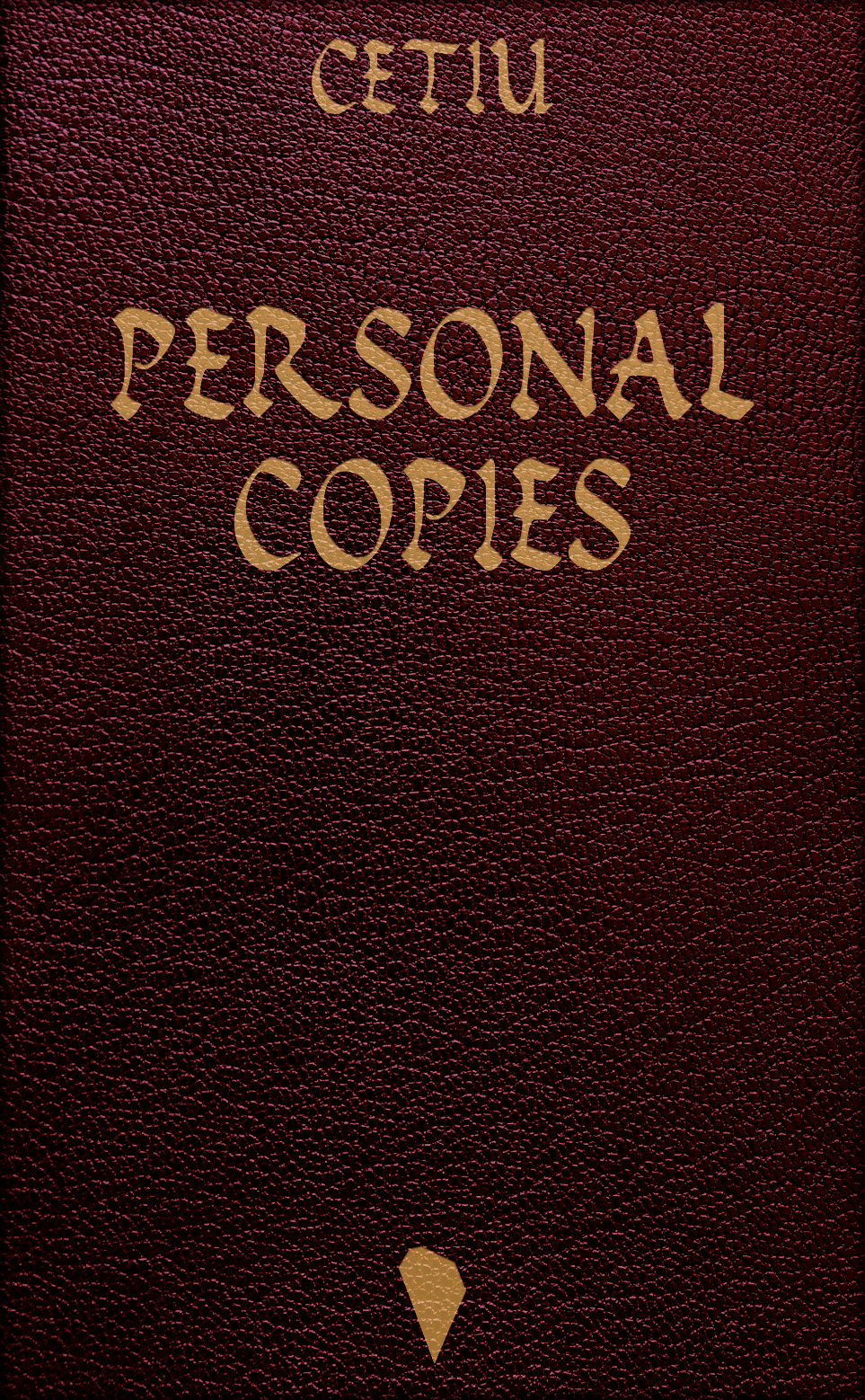
Having lived almost his entire life at work, a man is left alone in retirement. While walking at night, he accidentally wanders into an ancient cemetery and celebrates his birthday with the tombstone of a complete stranger. After making a wish, he finds himself underground. A new friend accompanies him to a wonderful world where there is everything. But is everything so perfect? Who created this world and why? New friends have their own plans.
With age, a time comes when the sad dates of death in your circle become almost as frequent as the not-so-joyful birthdays. Sometimes, they even start to overlap. Life is a peculiar thing—it behaves boldly and unpredictably. You live and don’t know when you will disappear from the face of the earth, from your circle of friends, from the memory of everyone who ever knew you, or if there will be a single soul left who remembers you.
Notice how even now you think about others, but you ought to think about yourself, having already realized that your life is far from eternal and can end at any moment. No one knows for sure what comes after death, so don’t listen to anyone about anything else. Everything others say means nothing at all in your life. Live! Yes, live! Start living! Stop thinking day after day. Were you waiting for the right moment? Congratulations, you’ve waited long enough! Time to begin!
New thoughts, for the first time in many years, visit Henry’s head, cluttered with trivialities. Sitting in the old city cemetery, he scrutinizes the gravestone of a complete stranger in the distant light of a streetlamp. It is impossible to say exactly whether the skeleton long buried in the ground was a human being from the standpoint of humanity. He walked the earth, perhaps flew in the sky on a plane, but did he live like a person?
We won’t know now; we are not part of the narrow circle of people who knew him in life and remember him after it. They may not exist at all. But we exist. And Henry exists. He sits near the cold, gray headstone of a certain Julius Odell and wonders if he himself is truly alive. Or if he is just an ordinary dead man, as cold and lifeless as Julius.
He sits quietly on the cold ground, damp with morning dew, and simply waits, not knowing what for. He has been waiting since yesterday. The south wind blew him here, catching him at the corner of Maryland Street and Ninth Work Avenue, where for thirty-seven years the starting point of his daily time count has invariably been located. Every day he wakes up at six fifteen in the morning, takes a shower, eats breakfast, puts on his old, worn clothes, gets ready, and involuntarily, out of habit, walks to work. He stopped thinking about it long ago; he just walks to the office.
Thirty-seven years ago, Henry moved to this district of a town unknown to anyone from Boston, where he grew up and left everything he had in life. Now, he realizes he left his whole life in the past. He received a promising position as an HR manager in a new branch of a large international corporation. He turns sixty years old, and he is still waiting for that bright prospect he came here for, filled with high hopes and dreams.
Henry waited, hoped, and tried his hardest to do his job better than anyone else possibly could, just to get a promotion. He waited until yesterday. Yesterday, at seven fifteen in the evening, he turned exactly sixty years old. He returned home after a heavy and confusing workday at the office. No one was nearby, only the empty, dark-green walls of the old cramped apartment, decorated with commendation letters “for dedication and responsibility,” which they gave out every five years. At work, they celebrated his birthday lavishly and noisily. His birthday coincided with his unexpected date of retirement. He never did get the coveted great promotion during those long thirty-seven exhausting, monotonous years filled with empty hopes.
All he could think to do yesterday after work was to buy a bottle of Scotch whiskey and an inexpensive chocolate bar from the store on the ground floor of his building and go to the cemetery. Actually, Henry wasn’t planning on the cemetery; he thinks it’s still a bit too early. He came here by chance, strolling through the evening city. His habitual life has come to an end. Now that he finds himself in the cemetery, he starts preparing for the ‘final’ straightaway. Having arrived here, he finally realizes everything that has happened to him over all these years. More accurately, he understands that after so many years, nothing good has ever happened.
It is a sad realization. In his childhood and youthful dreams of the future, everything was completely different. What he has now in life seems unreal. Not his life. For a second, he hopes he has been watching a sad, thirty-seven-year-long dream. He tries to wake up. It turns out he never fell asleep.
Not once has he closed his eyes with a smile and a peaceful heart, happy with the day gone by. Morning and evening passed in tension daily, and the workday was lived in a professional trance. The same words, the same monotonous movements. Now the moment has come to emerge from the long hypnosis. The promising young man has imperceptibly turned into a useless old man.
The young man always felt that old age was further from him than the end of the world, which the planet was threatened with so many times over his long life. Well, now they have met, and he has nothing to tell his older self. He sighs, pouring whiskey into the empty glass. He looks at the ‘stone’ Julius Odell, clinks his glass against the gravestone, and drinks to his health. It is a funny joke to make in a cemetery. Maybe it isn’t, but he laughs. It is just as funny as it is sad. He sits on the cold earth he will soon be in. He drinks with the one who has long been lying in it. A crazy old man.
He drinks enough to lie down. Where else can one rest like this but under the old willow in the cemetery? The thin branches reach out to him with their narrow leaves, and he lies motionless, wondering if his weeping friend will reach him. In a couple of years, Henry may become fertilizer for her roots. Now he is above the ground, soon he will be below the ground, and he won’t part with the willow. That’s what the drunk sixty-year-old Henry decides, closing his eyes for a minute. He becomes sad and feels so sorry for himself. There was so much he could have done, but he didn’t. Why did he live? If he lived at all. He doesn’t want to open his eyes. He doesn’t want to live. How to live. Why. He didn’t know before, and now he doesn’t even have prospects or options.
Henry does not open his whiskey-drugged eyes after the minute he had closed them, unaware that those sixty seconds would be his last. The willow pulls the birthday boy underground with strong roots, leaving no trace of him. Henry was right about the connection to the willow. He just hadn’t expected to meet it earlier than anticipated. Julius Odell gains a new neighbor, who was illegally laid to rest beside him a minute ago. No headstone with a name and dates of life means no identifying document. Try proving now that you existed and had a name.
The willow carefully drives away the worms and beetles that instantly scent the smell of death. Experience and knowledge of the specific odor are passed down from the first days of evolution. Man does not know how he appeared, but the little gravediggers are certainly created by nature to devour flesh. They absolutely do not care who created and prepared the food for them. They do not think about anything at all. They do not need to. Hunger guides instinct. Essentially, all life is built around the desire to fill one’s belly. If they do not eat now, they will soon become food for their brethren. Then, along with them, their potential future offspring will also perish. Food plays a decisive role.
Henry no longer needs to sustain a body that was absorbing oxygen and alcohol with a cheap chocolate bar just a minute ago. Now he has only one concern. He must open his eyes. How does he do that if a layer of earth presses down from above? He did not foresee such an important moment. He should have died with his eyes open.
Now it is too late to regret an improper death. He does not want to lie for an eternity, staring through dead eyelids. He feels a slap. At first, he does not understand what it was. He guesses, but does not believe it. A second slap follows immediately after the first. Outraged by the third blow, Henry looks at the outright rogue who dares to be so familiar with him.
“Well, how are you? Alive?” a contemporary with a bald spot and a mustache that flows into a beard whispers, smiling playfully.
“I don’t even know what to say,” Henry answers, bewildered, suppressing his indignation.
“You’re talking, so you’re alive!” the bearded man lifts the deceased birthday boy.
“Do we know each other?” Henry asks, trying to get a look at the insolent man who permitted himself to hit him in the face. Three times, no less.
“We’re practically friends already,” the stranger smiles contentedly.
“How so?” the recently deceased is surprised.
“You surprise me!” Henry feels a clap on his back. “We drank a bottle of whiskey together tonight, and you don’t recognize me? Must have really hit your brain,” he scrutinizes his new friend’s lost gaze.
“Julius Odell?” the birthday boy guesses uncertainly, struggling to recall the evening, not believing the reality of what is happening.
“Finally! You remembered!” Julius rejoices. “I only have one favor to ask you,” he whispers with a smile.
“What is it?” Henry asks, rubbing his sleepy and whiskey-dazed eyes.
“It makes me sad to remember my last name. Can you just call me Julius?”
“Of course, no problem,” Henry immediately agrees not to upset his new friend with his last name.
“Thank you! You’re a true friend!” Julius exclaims happily.
“Can I ask a question?” Henry asks tentatively.
“Ask away!” Julius reacts with interest.
“How did I end up here?” he slowly looks around, not giving in to panic.
“You died!” Julius answers cheerfully. “How else could you end up underground?” the bearded friend is surprised by the question.
“Died?” Henry utters the bright dark word with difficulty.
“Well, yes,” Julius confirms simply.
“And why did I die?” the birthday boy clarifies all the circumstances, hoping to uncover a mistake in the situation.
“Why, you ask? You made a wish,” Julius explains with a smile.
“What wish?” Henry is surprised.
“Exactly at nineteen hours, twenty minutes and zero seconds, you thought that life was over and you blew out the candles on the celebratory cake. So it ended.”
“But I didn’t mean it that way!” Henry exclaims in a panic.
“What difference does it make now?” Julius smiles. “Your wish came true and you can’t take it back.”
“Yes, you’re right,” Henry admits. Over so many years, he has learned to recognize and accept the irreversibility of words, thoughts, and time.
“Don’t worry so much, buddy,” Julius reassures him, patting his shoulder.
“I also have a small favor to ask you. Can you stop clapping me on the shoulder every time you say something?” Henry asks, a little irritated.
“Yes, of course,” Julius takes his hand off Henry’s shoulder. “Sorry, it’s a habit from life,” he smiles timidly.
“It’s nothing, it happens,” Henry calmly adjusts his jacket.
“This is so interesting,” Julius whispers mysteriously.
“What’s interesting to you?” the underground newcomer looks at him in surprise.
“You died on the day of my death. Just a few years later,” Julius explains cheerfully.
“I’m incredibly happy about that,” Henry says caustically. “Tell me instead, where are we?”
“In the ground, for now,” Julius answers without his former enthusiasm.
“And where should we be?” Henry is surprised that other options exist.
“Wherever we wish,” Julius offers a new smile.
“Then why are you here?” Henry is puzzled.
“Why, you ask? You came to visit me, how could I not stay with you for a bottle of whiskey.”
“What do you mean?” Henry clarifies.
“When people come to the grave of the deceased, the soul comes out to meet them.”
“But we weren’t acquainted.”
“I was surprised when I saw you, too. But I decided to stay to keep you company. Especially since you’re celebrating your birthday. Happy birthday, by the way!”
“Thank you,” the birthday boy smiles tensely.
“You’re not a bad guy,” Julius continues. “It was even interesting to be with you. And you brought good whiskey, but you could have gotten better chocolate,” he shakes his head with dissatisfaction.
“Sorry, I didn’t have any other kind,” Henry throws his hands up.
“It’s not bad, of course, but I prefer milk chocolate,” the bearded companion confesses in a childlike manner.
“Fine, the next time I come here to die with you, I’ll bring a bar of milk chocolate. Just for you,” Henry sneers.
“I see you’re starting to settle in,” Julius barely restrains himself from clapping Henry on the shoulder. “Your sense of humor is waking up.”
“If I took this unexpected burial on my birthday seriously, I’d go crazy right now. Not even whiskey would help me keep my sanity,” the birthday boy describes his condition.
“That’s true. It didn’t help me,” Julius jokes, twirling his eyes.
“Maybe we should leave now, it’s kind of damp and uncomfortable,” Henry eyes the niche in the ground with suspicion.
“It’s high time to leave the basements of life,” Julius agrees.
“Wait,” Henry says heavily.
“What is it?” Julius turns around.
“Something’s holding me,” he tries to see what exactly.
“Ah, that’s the willow,” he calmly examines his new friend. “She’s wrapped her roots around your body. She likes you. A strong woman never lets go of a man she likes for no reason, even if the feeling isn’t mutual,” Julius acknowledges with respect.
“Is there any point to that?” Henry is surprised.
“To what?” his new friend doesn’t understand.
“Holding onto someone who doesn’t want to stay?” he clarifies his thought for better understanding.
“Strength often clouds the mind while simultaneously intensifying desires. Then the desires become so strong that they seem to have come true. That’s how a strong person fancies a mutual feeling, and hence the overconfident actions.”
“And what should I do now?” Henry asks for advice, bewildered.
“Throw the sand of reality in her eyes,” Julius answers seriously and sadly.
Julius plunges his hand into the birthday boy’s chest and, with a sharp movement, pulls the living soul out of the dead body. The willow stirs, creaking horribly. The sixty-year-old guys disappear from her into the depths of the earth, riddled with plant roots, carnivorous insects, and the graves of those who no longer care. Right now, there is not a soul here.
Normal people do not visit cemeteries at night. It is not that Henry is somehow abnormal, it is just that few people would think of going for an evening walk in a cemetery and drinking whiskey with a headstone on their birthday. The tired man simply does not care, just like the local dead. You do not necessarily have to die to become indifferent to everything.
Two not-quite-normal spirits break free from the tenacious roots of the powerful woman willow. What’s the point of dying and remaining tethered to a single place? The time has come to shake off the old roots. Julius and Henry make their way through the soil, passing between stones and rotten coffins. They could pass through them, but they find it a bit unaesthetic. Henry isn’t ready to contemplate skeletons yet. Maybe he’ll come to terms with the idea when his body looks like all the others here, but that time hasn’t arrived yet.
The willow is much stronger than Julius thought. The roots pursue them across the entire cemetery. He wonders where she gets such long arms. A strong woman will reach you anywhere. They are learning this firsthand now. Julius moves ahead, dragging the inexperienced rookie behind him. In some cases, sixty years of experience isn’t worth one day in new circumstances. At such a high speed underground, even an experienced departed soul has trouble coordinating movement.
They pass through several coffins in a row. Henry had hoped that he wouldn’t see the skeletons in the dark. He was wrong. A spirit’s vision penetrates like sunlight, and everything is visible as if it were day. Now, he has three all dressed up skeletons on his tally. A woman in a black dress with a bouquet of dried flowers and two men in black suits and white shirts with ties. He wonders why the dead need ties.
“Where are we running?” Henry asks, not waiting for the outcome of the chase.
“We’re almost there,” Julius answers in a rush.
“Distract me with conversation so I don’t pay attention to all this,” the rookie asks, covering his eyes as he runs.
“What would you like to chat about at such an opportune moment?” Julius laughs, confidently pushing forward.
“Just tell me where we’re running, at least?”
“Did you see the cross?”
“What cross?”
“An ordinary, Christian one, with a crucifix,” Julius reminds him.
“Yes, I did!”
“Did you see what’s under Jesus’s feet?”
“Yes!” Henry recalls what he saw in church while he was alive.
“What’s there?”
“A skull and bones,” Henry answers, remembering.
“That’s what we’re running towards,” Julius smiles.
“But there are thousands of bones here!”
“Those skull and bones are special. There aren’t many of them here,” Julius assures him.
“In what way? What’s special about them?”
“Souls leave this world through the eyes of the skull, and the bones close the door behind them, like the spears of guards at the entrance to a king’s chambers.”
“And where do we look for them?” Henry clarifies, so he knows where to run.
“They’re always at the farthest southern point of any cemetery. We don’t need to look for them; I know where we need to run. We just need to get there faster.”
“Why is it taking us so long to get to them?”
“Are you even aware that this is the biggest and oldest cemetery in the state?” Julius asks pointedly, turning to Henry. “Besides, I had to weave a little among the coffins to tangle the roots among our silent helpers, escaping your admirer.”
“This is my first time here!” the birthday boy reminds him.
“Now it makes sense,” Julius smirks. “Get ready!”
“For what?” Henry tenses up.
“For this!”
Julius runs even faster. By the skull glowing for ghosts, he shoves Henry into the left eye and then dives into the right one himself. The bones cross behind them, severing the persistent willow’s roots. The chase ends with the spirits’ victory. The pursued are saved. In the distance, the creaking and groans of the abandoned woman can be heard.
Calming down, Julius and Henry rise from the wooden floor in the house as old as they are. Everything here breathes antiquity. The house still holds up, doesn’t surrender under the weight of time—it lives. Its soul is ever younger. Only now does Henry take a good look at Julius. At the cemetery, he was an old man; here, he’s a young man, just as Henry was when he arrived in a hopeless pursuit of a bright future.
The newcomer finds the only mirror in the house. He wipes away the cobwebs, cleans off the dust. He looks into the mirror. No one. He looks at Julius. The experienced ghost instills confidence with his mere presence. Henry looks into the mirror again. Before him is the very same twenty-three-year-old man. A sparkle of hopes and dreams shines in his eyes, and his body is full of vital energy.
From the transformation he saw, the power in him goes over the edge. Julius approaches. He, too, peers into the dusty mirror. Sixty-year-old dead men become young handsome guys. It’s impossible to believe, but Julius knows for certain that it is so. In time, Henry will also accept the joyful fact. He simply has no choice.
Julius watches with a smile as Henry feels and pulls at the young skin on his face and hands. The experienced ghost tries not to laugh so he doesn’t embarrass Henry. Composure is hard to maintain. Julius takes the birthday boy by the arm, and they step out onto the porch. The young men stand on the threshold of the wooden house, on the shore of a lake surrounded by high mountains covered with dense forest and snow on their peaks. Henry forgets about his face. Now he can’t believe he’s in a place like this. He occasionally glances at the smiling Julius.
“Am I the only one seeing this?” Henry asks, not believing his eyes.
“Well, why would you be? You think you’re the only one lucky enough to die?” Julius answers with a smile.
“Does everyone see this?” the newcomer wonders.
“Only those who want to,” Julius calmly explains.
“Did no one else want to see this beauty?”
“Lots of people want to.”
“Then why aren’t they here?”
“Just imagine what that would be like,” Julius says seriously.
“I can imagine,” Henry whispers, in slight shock at the thought of the imagined crowd.
“Everyone has their own copy of their desired places.”
“A copy?” the newcomer clarifies.
“Yeah, a copy,” Julius repeats. “Let’s say everyone wanted to be in this house and look at the lake. There’s only one house, but many who desire it. If we let everyone in at once, there’d be no room to stand on one foot. You could wait for a second death before your turn came. But this way, all the places are copied. Everyone has their own set of copies of desired places. Admit it, you always wanted to be here. You’re here. This is one of the copies in your set.”
“And what else is in my set?” Henry asks.
“That’s only known to you,” Julius says, looking at him with a smile.
“And how did you end up here if this is my copy?”
“You wanted to see me here,” Julius explains proudly.
“So, can people we want to see be near us?”
“Let me clarify. Not people, but essences of people. Only those who are no longer in the world of the living.”
“I see,” Henry says, slightly saddened. Then he brightens up, remembering that most of the people he knew, who were close to him, had long departed the world of the living. Especially considering that he could count those loved ones on the fingers of one hand.
“That’s better,” Julius smirks, looking at the newcomer’s cheerful face.
“I like it here already,” Henry says contentedly.
“Why wouldn’t you like it in your desired place? Who do you want to see?”
“No one right now. You’re not in a hurry, are you?”
“I’ve already been to all my copies. I’m quite tired of them after all these years. I can stroll through the copies with you.”
“I understand. So, you’ll stay with me a little longer?” Henry is delighted. He needs the support right now until he fully adjusts to the new life. Or death. It doesn’t matter.
“Of course! We’re best friends now.”
“Right, that’s true,” the birthday boy remembers the celebration of his birthday and death in the cemetery with whiskey and chocolate. Julius also smiles, remembering that evening as he looks through Henry’s thoughts and perception.
“What do you want?” Julius asks. “Where do you wish to go?”
“Can we just sit on the porch?” he asks quietly, wanting to relax a bit.
“Of course. Would a rocking chair be okay?”
“I’ve always wanted to ride in one,” Henry says enthusiastically, looking at the chair to the left.
“Now’s the perfect time to try it,” Julius encourages him.
“Yeah, you’re right. I’m sixty years old, after all. It’s time,” the young spirit laughs.
“Didn’t you see what the mirror showed you?”
“I did. But that’s not true, is it?” Henry is disappointed.
“Why do you say that?” Julius is slightly indignant.
“I know I’m sixty, not twenty-three,” Henry says sadly, settling into the chair. He rocks back and forth like an old man.
“Mirrors never lie,” Julius declares seriously, sitting in the chair next to him. “They always show the true state of a person’s soul.”
“I don’t feel like that.”
“Then your soul stopped aging at that age. You locked it in that time when you felt alive. Only the body continued to age.”
“So, I abandoned my soul and went on without it?” Henry asks guiltily.
“Yes. As you can see, it was for the best. The soul hasn’t worn out one bit,” Julius encourages him.
“Did the same thing happen to you?”
“No,” Julius drawls, smirking.
“Then why are you just as young?”
“I realized at this age that it was the best time of my life and I wanted never to grow old. I never paid attention to my aging and wrinkling body, as if we weren’t acquainted. I even tried not to look in mirrors. As you can see, I managed to remain young at heart.”
“Is everyone here this young?”
“Are you kidding me! No, of course not!” Julius practically laughs.
“Then what are they like?” Henry asks, in case he meets anyone.
“Mostly, they’re just old men and women here,” the experienced ghost grimaces.
“Why? Did everyone die old?”
“You still don’t get it,” Julius sighs, smiling. “You and I remained young at heart. But for most, it wasn’t just their bodies that wore out. Their souls became just as old and frail. A person is as old as they feel and how they treat themselves. An important factor in this special matter is one’s attitude towards the world. If a person treats everything like a grumpy old man, that’s what he becomes.”
“Are there no young souls at all?”
“There are plenty of young ones. They’re just much fewer in number. They are rare.”
“How do you even see each other if everyone is in their own copies?”
“It’s like a lottery. You want to talk to a ghost your age, like us,” Julius points a finger at himself and Henry, “and you send out a thought. On its way, it becomes a desire, and the desire is fulfilled. A peer appears in your copy.”
“Do desires come true right away like that?”
“It depends on how much you want it. There’s something like a desire rating here. Its own unique queue.”
“How does that work?” Henry asks, slightly confused by the new conditions.
“The strongest desires are fulfilled first, and then the weaker ones,” Julius calmly explains. He didn’t understand everything immediately either.
“And what if new, supremely strong desires keep coming in?” the newcomer posits.
“Then the weaker ones will be fulfilled even later.”
“What about the weak desires then?”
“If they’re weak, it means they’re not real. Such thoughts rarely become genuine desires and never come true,” Julius explains seriously.
“Then why even wish for something if you want it so weakly?” Henry doesn’t quite understand.
“Something to do. Souls need to occupy their thoughts with something. So, they think about nonsense,” Julius smirks.
“Why not want something stronger?” Henry is surprised. “They’re desires; they’re meant to be intensely desired.”
“In most cases, souls have time to become disillusioned with life where desires don’t come true because they’re just as weak. So, they don’t want anything. It’s a habit.”
“Wait,” Henry stops his chair.
“Something unclear?” Julius continues to rock.
“Is everything possible in these copies? And all you need to do is want it intensely?”
“It’s like that everywhere!” Julius smiles. “No one takes the main condition seriously. No one believes in such simple truths.”
“Yeah, ghosts are strange,” Henry continues to rock.
“People are even stranger,” Julius laughs.
The young souls look at the water surface, rocking in the chairs like the old men they were when they died. Mountains and forests are everywhere, reflected in the lake and standing in their proper places. The wooden floor creaks under the chairs. The sound echoes through the picturesque surroundings. Julius looks at the beauty before him with the smile of an old man content with his life.
Henry’s face freezes in thought. Maybe it’s his imagination, but he hears the voices of other ghosts roaming the mountaintops. He looks closer. No one is visible, but the voices are audible. He looks at Julius questioningly. The young old man has learned to ignore everything. A good skill. The birthday boy also relaxes.
“Did you two get something mixed up?” a wrinkled spirit asks, coming out to them.
“No, we’re in our copy,” Julius answers confidently.
“Did you look at the walls?” the old man clarifies.
“What’s there?” Henry asks, turning toward the house and the stranger.
“My family photos, not yours,” the old spirit says with displeasure.
“Excuse me,” Henry stops and stands up from the chair.
“Wait,” Julius also gets up from his chair. “This can’t be.”
“Why not?” the old ghost wonders calmly.
“I know for a fact we’re in this guy’s copy,” Julius says, pointing confidently at Henry, who doesn’t know what to think or say and just stays silent.
“Let’s go see,” the old man enters the house. The guys follow him.
A lot has changed inside. Carpets now cover the wooden floor. The oval mirror has become square, and the dust and cobwebs have disappeared from it. The small dining table has lengthened and widened. Clean silverware has appeared, neatly laid out on the tablecloth. Napkins are folded into swans. The number of chairs has visibly increased. Everything looks as if a family dinner will soon take place.
Garlands cut from paper by children’s hands are hung around the house. Henry used to make things like that himself. There is a lot of delicious food in large dishes. Everything is so beautiful and smells so strongly that the guys’ mouths water. A roasted turkey stands in the middle of the table. Julius looks at the changes with composure, as if it had always been this way, showing no emotion, though he manages to doubt the correctness of his actions.
“Well, are you convinced, boys?” the old man addresses them.
“Yes, we apologize, sir,” Julius apologizes. “Some ridiculous mistake happened.”
“Looks like it,” the unexpectedly appearing ghost smiles knowingly, pleased that the dispute has been resolved in his favor. “If you don’t mind, my whole family is coming over soon,” he opens the door for them. “I’m not in the mood to explain on a day like this who these two young men are who snuck into my house uninvited,” the old man is clearly hinting at them.
“Yes, we understand, please forgive us,” Henry apologizes, heading for the exit.
“Sorry again,” Julius passes the newcomer.
“It’s nothing, boys,” the old man smiles. “Happy Thanksgiving.”
“Thank you, sir, and you, too,” the guys respond. Everyone has their own holidays within their copies.
“Hold onto me tightly,” Julius says quietly, stepping out the door.
“Okay,” Henry grabs his elbow.
“Not that tightly,” Julius smiles.
“Sorry,” Henry says guiltily, slightly loosening his grip.
“Better.”
I am not urging anyone to do anything.
All events and characters are fictional.
Any resemblance to actual persons or events is purely coincidental.
I sincerely apologize if I have offended anyone.
Highly Recommended Age: 18+
The author bears no responsibility for the reader's perception of the book.